
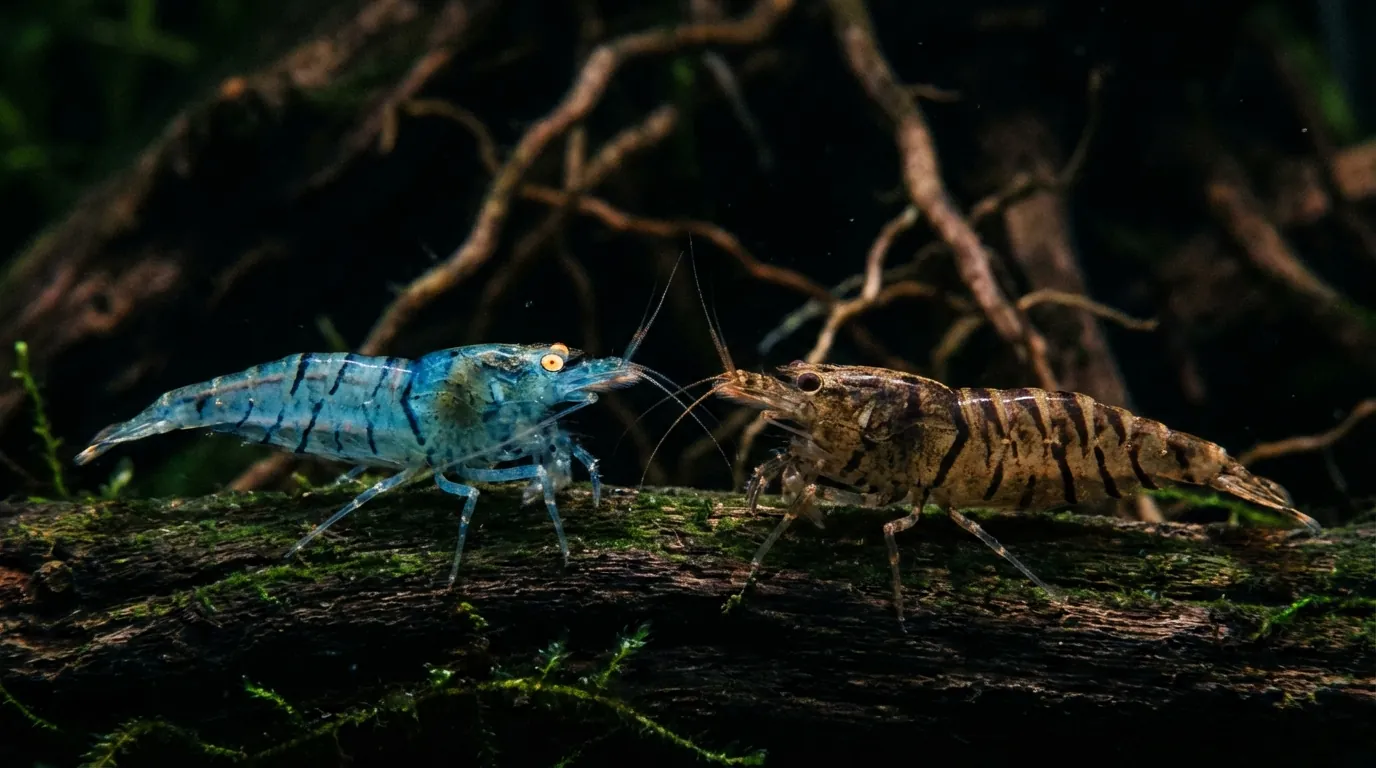
Tiger Shrimp (Caridina cantonensis species complex) are captivating Caridina known for their distinct striped patterns. While sharing ancestry with Crystal Red/Black Shrimp, they often have slightly different care requirements and include some truly stunning variations like the Orange Eye Blue Tiger (OEBT). This guide dives deep into keeping and breeding these striped beauties.
(First time with Caridina? Read Caridina vs Neocaridina)
Understanding Tiger Shrimp
- Origin: Native to southern China.
- Appearance: Characterized by dark stripes (usually black or deep blue) on a lighter body (clear, yellow, blue, blonde). Size is typically 2-3 cm.
- Temperament: Peaceful foragers, suitable for species-only tanks or with other peaceful Caridina (with caution regarding hybridization).
- Difficulty: Generally considered intermediate to advanced, requiring stable parameters similar to other Caridina, though some variations are slightly hardier than CRS/Taiwan Bees.
Popular Tiger Shrimp Variations
- Standard Tiger Shrimp: Clear or slightly yellowish body with distinct black stripes.
- Super Tiger Shrimp: Increased number or thickness of black stripes compared to standard Tigers.
- Orange Eye Blue Tiger (OEBT): One of the most sought-after variations. Features a blue body (ranging from light to deep) with dark stripes and striking orange eyes. Can be sensitive.
- Orange Eye Blonde Tiger: Similar orange eyes but with a yellowish or blonde body instead of blue.
- Royal Blue Tiger: An OEBT variation selectively bred for an intense, deep royal blue body coloration.
- Black Diamond Tiger: A very dark, almost black body coloration where the stripes may be less distinct against the dark background. Often have orange eyes.
- Red Tiger: Less common, features reddish-brown stripes on a lighter body.
Care Requirements
Tiger parameters can vary slightly depending on the specific line and whether they are kept in active or inert substrate (some keepers adapt Tigers to slightly higher pH/KH than CRS/Bees, but low pH/KH is generally safer, especially for orange eye variants).
-
Tank Size: A 10-gallon tank or larger is recommended for a stable environment.
-
Water Parameters: Tiger Shrimp require specific parameters, similar to other Caridina, but may tolerate slightly higher temps than CRS.
-
Substrate: Can be kept on inert substrate (if parameters are met via source water/remineralizers) OR active substrate (recommended for low pH stability, especially for OE variants). (See Active Substrate Guide)
-
Filtration: Gentle filtration like sponge filters or HOBs with pre-filter sponges. (See Equipment Guide)
-
Water Changes: Perform regular (10-20% weekly) water changes using RO/DI water remineralized to the target GH and TDS.
-
Amazon: RO/DI Water Systems on Amazon
-
Amazon: TDS Meters on Amazon
Feeding Tiger Shrimp
- Omnivores: Feed a varied diet.
- Staple: High-quality shrimp pellets/granules.
- Supplements: Blanched vegetables (zucchini, spinach), algae wafers, biofilm sources (leaf litter, cholla wood), occasional protein (bee pollen, specialized foods).
- Frequency: Small amounts once daily or every other day. Remove uneaten food.
- (See Feeding Guide & DIY Food Guide)
Breeding Tiger Shrimp
- Requirements: Stable, optimal water parameters are paramount. Breeding often occurs more readily than CRS but less prolifically than Neocaridina.
- Process: Similar to other Caridina. Females develop saddles, molt, mate, carry eggs (~28-35 days).
- Sexing: Females are typically larger, wider tail section, may show saddle. (See Sexing Guide)
- Shrimplets: Require mature tanks with biofilm and hiding places (mosses, leaf litter). Feed powdered baby shrimp food. (See Feeding Baby Shrimp Guide)
- Improving Success: Maintain pristine water, stable parameters, provide varied diet, ensure adequate hiding places.
Hybridization Potential
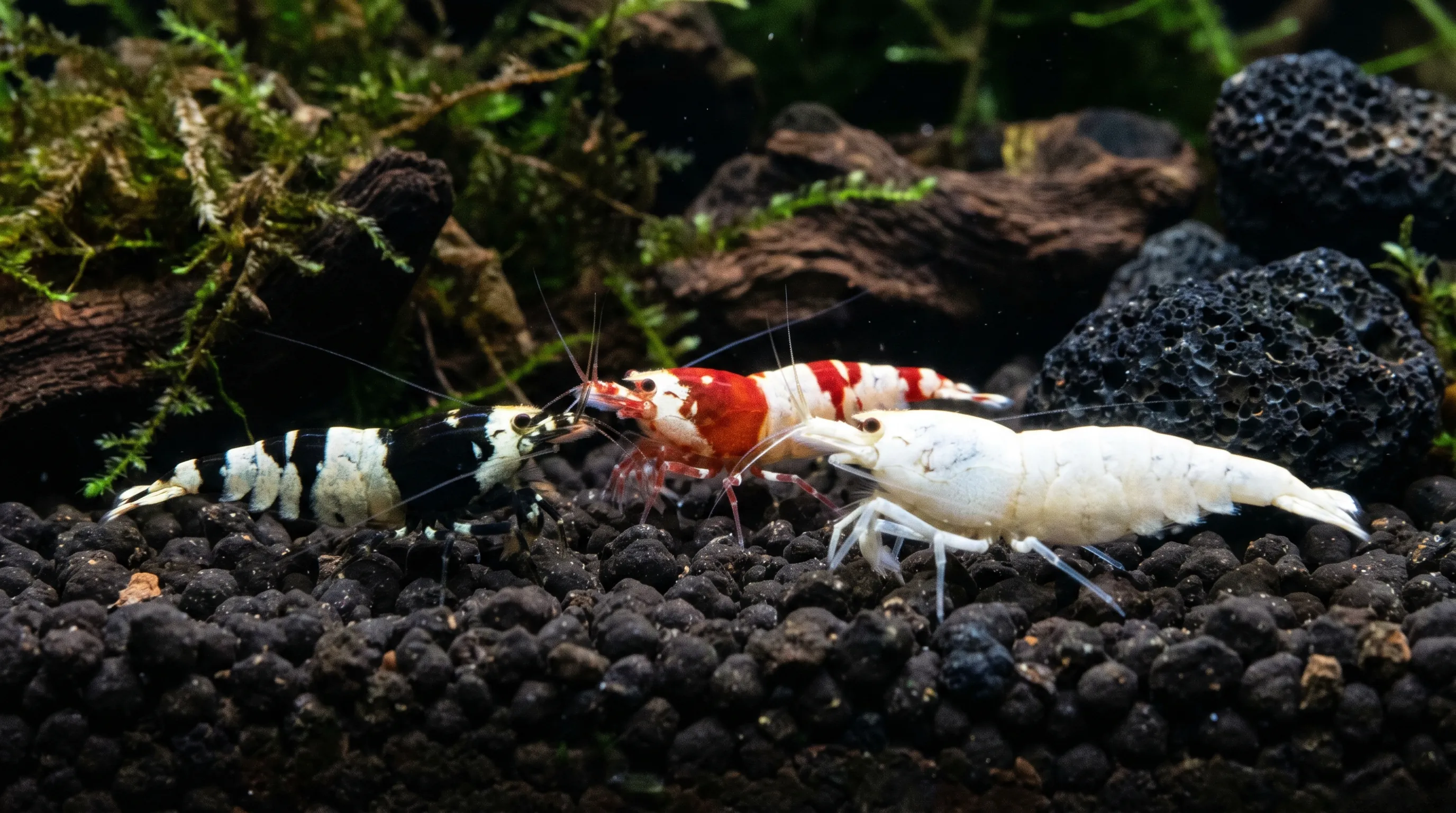
- Tiger x Crystal (Tibee): Tiger Shrimp can readily hybridize with Crystal Red (CRS) and Crystal Black (CBS) shrimp, producing offspring known as “Tibees.” Tibees exhibit a mix of traits and are used in developing other lines.
- Tiger x Taiwan Bee (Taitibee): Hybridizing Tigers with Taiwan Bees (like Pandas, King Kongs) can produce “Taitibees.”
- Maintaining Purity: If you want to maintain a pure Tiger line, do not keep them with CRS, CBS, or Taiwan Bees. (See Cross-Contamination Guide)
Troubleshooting
- Common Issues: Similar to other Caridina - failed molts (check GH/TDS), sudden deaths (check parameters/stability), lack of breeding (check parameters/diet/stress). Orange eye variants can be particularly sensitive to parameter swings.
- (Refer to the Troubleshooting Caridina Issues Guide)
Conclusion
Tiger Shrimp offer a fantastic blend of striking patterns and slightly more forgiving nature compared to some other high-end Caridina. With careful attention to water parameters (especially stability, GH, and TDS), appropriate substrate choice, and a good diet, you can successfully keep and breed these captivating shrimp. Whether you prefer the classic look or the stunning orange-eyed variations, Tiger Shrimp are a rewarding challenge for the dedicated shrimp keeper.


Discussion