
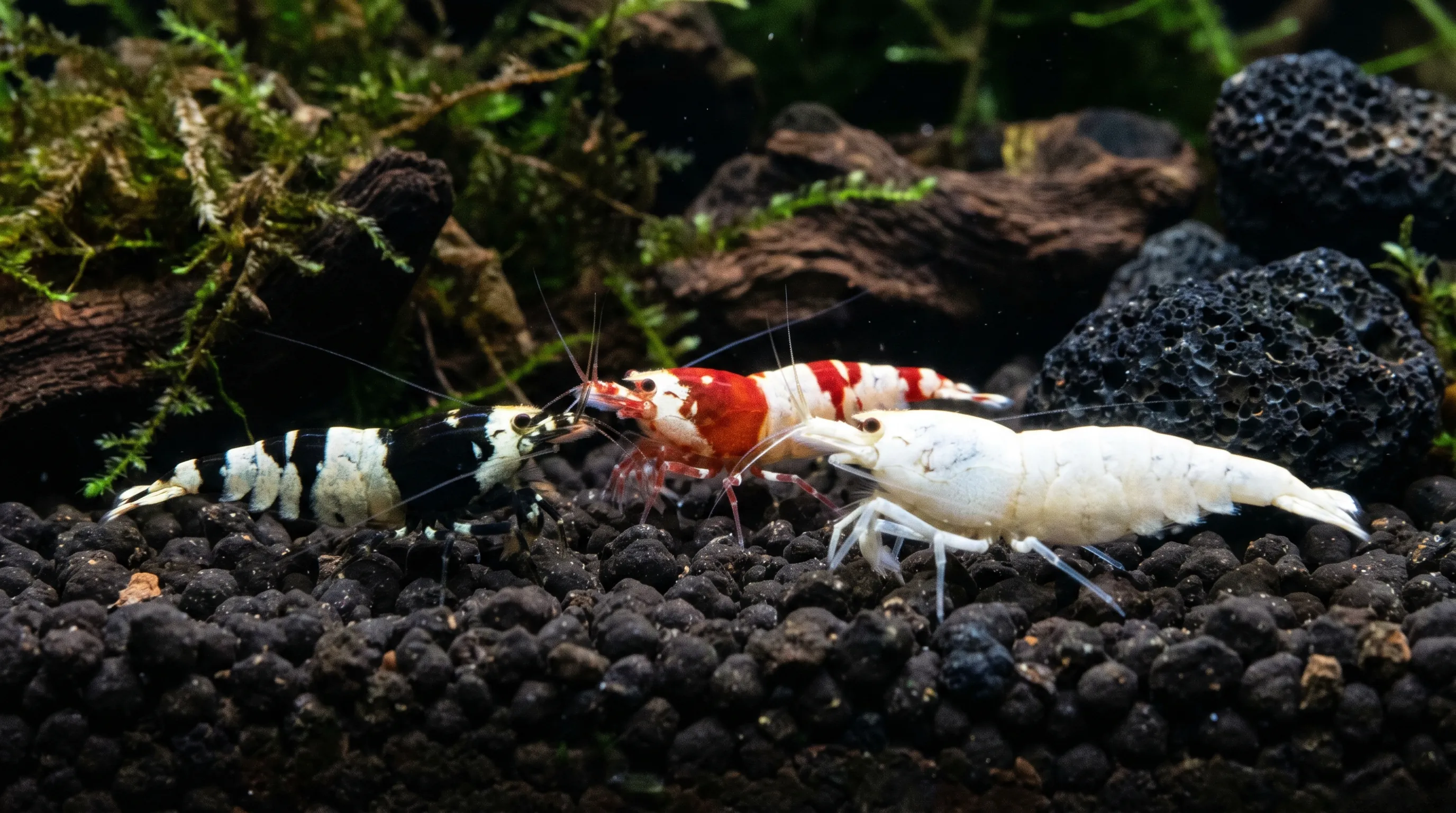
The term “Bee Shrimp” often refers to the foundational Caridina cantonensis variations that captivated the shrimp hobby: Crystal Red Shrimp (CRS), Crystal Black Shrimp (CBS), and Golden Bee Shrimp. These shrimp are renowned for their striking patterns and are ancestors to many other Caridina morphs, including Taiwan Bees. This guide explores the care and keeping of these classic Bee Shrimp.
(First time with Caridina? Read Caridina vs Neocaridina)
Understanding Bee Shrimp
- Origin: Selectively bred from wild Bee Shrimp (Caridina cantonensis) native to streams in southern China.
- Key Types:
- Crystal Red Shrimp (CRS): Red and white banded pattern. A mutation of the wild Bee Shrimp.
- Crystal Black Shrimp (CBS): Black and white banded pattern. Genetically similar to CRS, often considered a color variation.
- Golden Bee Shrimp: A variation with a golden/yellowish-white body, often lacking distinct bands or having very faint white bands.
- Difficulty: Intermediate to Advanced. Require specific soft, acidic water parameters and stability.
CRS/CBS Grading
Crystal Red and Black Shrimp are graded based on the quality and distribution of their white and colored bands. Grading is subjective but follows general patterns:
- Lower Grades (C, B, A): More transparent areas, less intense white, thinner or broken bands, more color bleeding.
- Mid Grades (S, S+): More opaque white, better color separation, more defined bands.
- High Grades (SS, SSS): Very opaque, solid white, crisp separation from red/black, specific patterns (e.g., Hinomaru, No-Entry, Mosura). Higher grades are significantly more expensive.
- (Learn basics of genetics: Shrimp Genetics Explained)
Care Requirements
Bee shrimp require specific conditions, very similar to Taiwan Bees.
-
Tank Size: Minimum 10 gallons, 20 gallons+ recommended for stability.
-
Water Parameters (Crucial):
- Temperature: 68-74°F (20-23°C)
- pH: 5.8 - 6.8 (Lower end preferred, especially for breeding)
- GH: 4 - 6 dGH
- KH: 0 - 1 dKH
- TDS: 100 - 160 ppm (Can vary slightly based on line)
- (See Water Parameters Guide, Advanced Parameters)
-
Water Source: RO/DI water remineralized with a GH+ (not GH/KH+) product is highly recommended for consistency and achieving low KH. (See RO/DI & Remineralizer Guide)
-
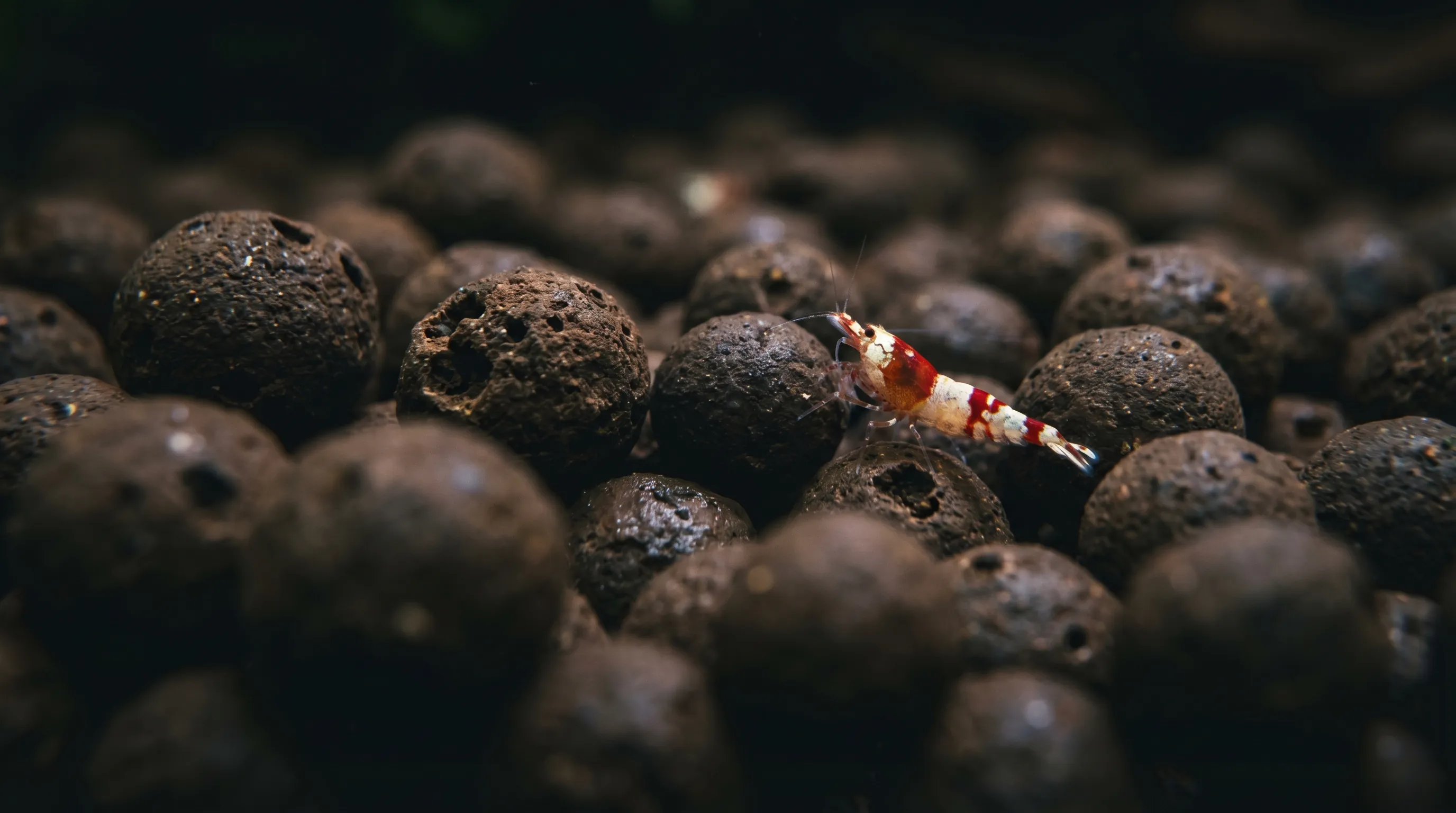
Substrate: Active/buffering substrate is strongly recommended to maintain stable low pH and KH. (See Active Substrate Guide)
-
Filtration: Gentle filtration (sponge filters ideal). Mature, cycled tank is essential. (See Cycling Guide & Equipment Guide)
-
Decor: Provide plenty of hiding places using plants (mosses are great), driftwood, and leaf litter. (See Decorating Guide)
-
Amazon: ADA Aqua Soil Amazonia on Amazon
-
Amazon: TDS Meters on Amazon
Feeding Bee Shrimp
- Omnivores: Require a balanced diet.
- Staple: High-quality shrimp pellets formulated for Caridina.
- Supplements: Biofilm sources (leaves, cholla), blanched vegetables sparingly, specialized breeding foods, bee pollen occasionally.
- Caution: Avoid overfeeding, as this quickly fouls water in sensitive Caridina setups. Remove uneaten food promptly.
- (See Feeding Guide & DIY Food Guide)
Breeding Bee Shrimp
- Prerequisites: Stable, optimal water parameters are non-negotiable.
- Process: Similar to other Caridina. Mature females develop eggs (saddle), molt, mate, and carry eggs for ~28-35 days.
- CRS x CBS: Breeding Crystal Reds with Crystal Blacks will produce more CRS and CBS, following basic genetics (often black is dominant or co-dominant depending on specific lines).
- Golden Bees: Often arise spontaneously from CRS/CBS lines or can be bred selectively.
- Shrimplets: Need mature tanks with ample biofilm and hiding spots. Extremely sensitive to parameter changes. (See Feeding Baby Shrimp Guide)
- Improving Yield: Focus on water stability, quality diet, minimal stress, and adequate cover.
- (See CRS Breeding Guide & Breeding Tank Setup)
Relation to Taiwan Bees
Taiwan Bee Shrimp (Pandas, King Kongs, Blue Bolts, etc.) originated from mutations within CRS/CBS lines, often involving recessive genes. Breeding CRS/CBS can sometimes produce Taiwan Bee offspring if both parents carry the recessive genes, though dedicated Taiwan Bee lines are more common now.
Troubleshooting
- Common Issues: Bee Shrimp face the same challenges as other sensitive Caridina: failed molts (check GH/TDS), sudden deaths (check parameters/stability, acclimation), poor breeding rates (check parameters/diet/stress), disease susceptibility when stressed.
- (Refer to the dedicated Troubleshooting Caridina Issues Guide)
Conclusion
Classic Bee Shrimp like Crystal Reds, Crystal Blacks, and Golden Bees remain incredibly popular for their beauty and the rewarding challenge they offer. Success hinges on meticulous water parameter management using RO/DI water, appropriate remineralizers, and active substrates. Providing a stable, clean, low-pH environment is key to enjoying the health, vibrancy, and breeding potential of these iconic Caridina shrimp.


Discussion