
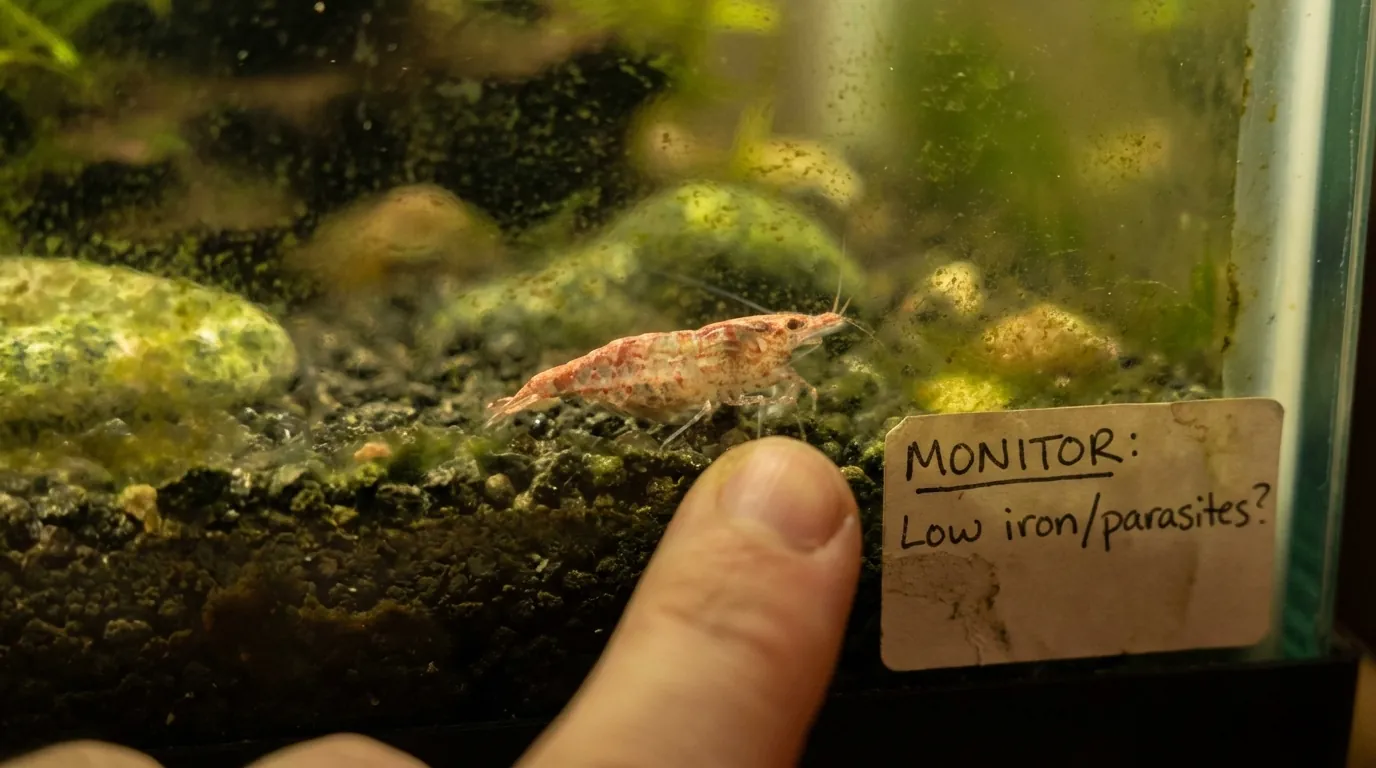
Neocaridina shrimp (like Cherries, Blue Dreams, Yellows) are known for their hardiness, making them great for beginners. However, even these adaptable shrimp can encounter problems. This guide addresses some common issues Neocaridina keepers face and offers troubleshooting steps.
(First, ensure your basics are covered! See the Beginner’s Guide and Neocaridina Care in the Species Guide)
1. Shrimp Dying Suddenly / Colony Wipeout
This is often the most alarming issue.
Potential Causes:
- Poor Water Quality (Most Common):
- Uncycled Tank: Ammonia or Nitrite poisoning (Check Cycling Guide).
- Parameter Swings: Rapid changes in pH, GH, KH, or temperature (Check Water Parameters Guide).
- High Nitrates: While less toxic, very high nitrates (>40-50 ppm) can cause stress over time.
- Contaminants:
- Heavy Metals: Copper from old pipes or certain medications is lethal.
- Pesticides/Chemicals: Aerosols, cleaning products near the tank, residue on hands.
- Tap Water Issues: Chlorine/Chloramine if dechlorinator wasn’t used or was ineffective.
- Failed Acclimation: Adding shrimp too quickly without proper drip acclimation (See Acclimation Guide).
- Disease Outbreak: Less common for mass die-offs unless conditions are very poor, but possible (See Disease Guide).
- CO2 Issues (Planted Tanks): Accidental overdose or large pH swings caused by CO2 injection.
Troubleshooting Steps:
- Test Water Parameters IMMEDIATELY: Check Ammonia, Nitrite, Nitrate, pH, GH, KH, TDS.
- Perform Water Change: If parameters are off (especially Ammonia/Nitrite), do an immediate 30-50% water change using properly conditioned/remineralized water matched to safe parameters.
- Review Tank History: Any recent changes? New plants/decor? Sprays used nearby? Changes in tap water source?
- Check Equipment: Is the heater malfunctioning? Filter running correctly?
- Observe Remaining Shrimp: Look for signs of disease, lethargy, or distress.
2. Shrimp Not Breeding
Neocaridina are usually prolific breeders.
Potential Causes:
- Incorrect Parameters: While hardy, they breed best within ideal ranges (pH 6.5-7.5, GH 6-8, KH 2-5, Temp 72-78°F).
- Immature Shrimp: They need time to reach sexual maturity (usually around 2-3 months).
- Incorrect Sex Ratio: Need both males and females. Ideal ratio is roughly 1 male to 2-3 females.
- Stress: Poor water quality, unstable parameters, harassment by tank mates, insufficient hiding places.
- Poor Diet: Lack of protein or essential minerals can hinder breeding.
- Low Temperature: While they tolerate cooler temps, breeding slows significantly below ~70°F.
- Colony Too New/Small: Sometimes takes a new colony time to settle in.
Troubleshooting Steps:
- Verify Parameters: Ensure pH, GH, KH, TDS, and Temp are stable and within preferred ranges.
- Confirm Sexes: Check for saddles on females and size differences (females usually larger/more robust). (See Sexing Guide)
- Improve Diet: Offer varied, high-quality foods including protein sources. (See Feeding Guide)
- Increase Temperature Slightly: Aim for the mid-70s °F.
- Reduce Stress: Ensure adequate hiding places (plants, decor), check for aggressive tank mates, maintain stable parameters.
- Patience: Give a healthy, mature colony time.
3. Color Loss / Fading Color
Potential Causes:
- Stress: Poor water quality, parameter swings, recent move, or inadequate environment are common culprits.
- Poor Diet: Lack of essential nutrients/pigments.
- Genetics/Age: Lower grade shrimp may naturally have less intense color. Color can sometimes fade slightly with age.
- Substrate/Background Color: Light-colored substrates/backgrounds can sometimes make shrimp appear paler as they try to blend in.
- Molting: Shrimp often appear paler just before or after molting.
Troubleshooting Steps:
- Check Parameters: Ensure stability and optimal ranges.
- Evaluate Diet: Offer color-enhancing foods and varied nutrition.
- Reduce Stress: Improve hiding places, ensure tank isn’t too bright, check tank mates.
- Consider Tank Aesthetics: Darker substrate/background often enhances color perception.
- Observe Post-Molt: See if color returns after a molt.
- Genetics: If shrimp were low grade initially, intense color may not be achievable. (See Neo Color Guide)
4. Failed Molts / White Ring of Death
Potential Causes:
- Possible Causes: Incorrect GH/KH, rapid parameter swings, iodine deficiency (less common).
- Troubleshooting Steps:
- Test GH/KH: Ensure GH and KH are within the ideal range (GH 4-8, KH 0-5 for Neos). Use liquid test kits.
- Stabilize Parameters: Maintain consistent water parameters. Avoid large, rapid water changes.
- Use RO/DI (If Necessary): If tap water is unsuitable, consider using RO/DI water remineralized specifically for Neocaridina (e.g., Salty Shrimp GH/KH+).
- Sudden Parameter Swings: Large water changes with mismatched parameters can shock shrimp and trigger bad molts.
- Iodine Deficiency (Less Common): Some suggest iodine aids molting, though usually met through diet/water changes.
- Poor Diet/Lack of Minerals: Especially Calcium.
Troubleshooting Steps:
- Test GH & KH: Ensure they are stable and within the recommended range for Neocaridina.
- Improve Water Change Practices: Ensure new water closely matches tank parameters (Temp, GH, KH, pH). Perform changes slowly.
- Supplement Minerals: Offer calcium-rich foods or add cuttlebone/mineral supplements. (See DIY Food Guide)
- Ensure Diet Variety: Provide high-quality, varied foods.
Conclusion
While generally hardy, Neocaridina shrimp can still face problems, most often linked to water quality, parameters, or stress. By systematically checking water parameters, reviewing husbandry practices (feeding, maintenance, acclimation), and observing your shrimp, you can usually identify and resolve common Neocaridina issues. Remember that stability is key for these sensitive creatures.


Discussion